
Missouri State University

Skip to content Skip to navigation
a b c d e f g h i j k l m n o p q r s t u v w x y z

Health and Human Services News

  • McQueary College of Health and Human Services

A journey beyond limits

March 10, 2026 by Sewly Khatun

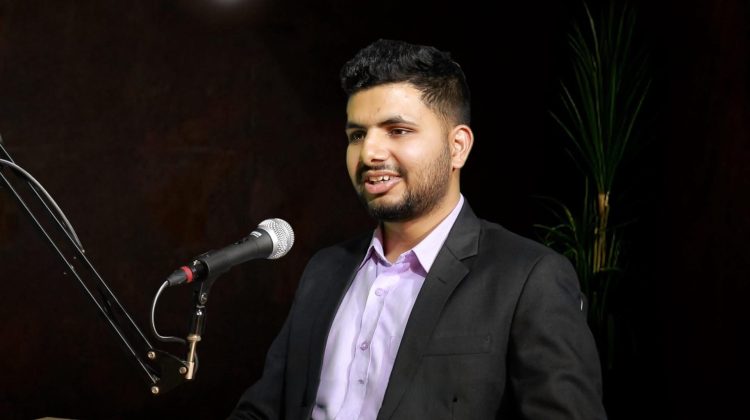
Madhusudan Ghimire

For many international students, moving abroad can feel overwhelming. Leaving home and starting over in a new country test even the most confident person.   

Missouri State University counseling graduate student Madhusudan Ghimire knows this firsthand. His journey shows how resilience can grow from life’s hardest moments.  

Though he once felt alone, he learned to turn that experience into a sense purpose, one that began long before Missouri State became part of his story. 

Overcoming a tough childhood 

Born with a visual impairment in a remote village in western Nepal, Ghimire spent his early years there before his family moved to Kathmandu when he was two. His parents relocated the family so he could attend school and access better opportunities. 
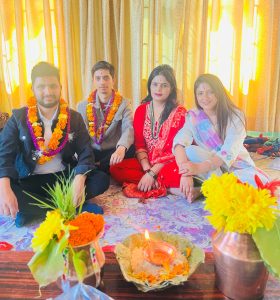
Ghimire with his sisters and cousins at a family program.
Ghimire (left) with his sisters and cousins at a family program.

But school was not always easy for Ghimire. Inclusive education was limited in Nepal, and his parents had to find a school where he could learn using braille. Even then, he felt lonely. 

“I used to experience isolation and had very few friends,” he said. “Most of the time, I was by myself. While other students played soccer or gathered with friends, I often stayed on the sidelines.” 

Social activities were difficult and classmates usually did not know how to interact with him. During those years, his siblings became his closest companions. His younger sister especially helped him through moments of loneliness.  

One experience in middle school stayed with him for years.  

In Nepal, students must ask permission before entering a classroom if a teacher is already inside. One day in seventh grade, Ghimire walked into a classroom without realizing the teacher was there. Because of his visual impairment, he could not see where she was standing among some of the students. The teacher reacted harshly, pulling his hair and forcing him out of the classroom.   

“That incident made me think about who I am and what I need to do in my life,” he said.  

The moment was painful, but it pushed him to reflect on his future. 

Finding a voice through literature and radio 
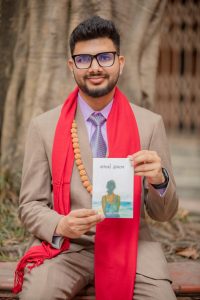
Madhusudan Ghimire
Ghimire’s first poetry book, “Mayako Aayatan.”

During those difficult years, Ghimire found comfort in listening to radio programs featuring poetry, storytelling and literature.  

“Radio programs inspired me to begin writing and literature became an important part of my life, helping me express myself and fill emotional gaps,” he said. “Those broadcasts became a quiet escape when I felt isolated.”  

Reading soon became a passion as well. In high school, he immersed himself in Nepali literature and once read more than 150 novels in a single year. Writing helped him process emotions and express experiences that were difficult to share in other ways. In 2024, he published his first poetry collection, “Mayako Aayatan” (Volume of Love).  

He also hosted a poetry-focused radio program for more than three years during his undergraduate studies in Nepal. Listeners often wrote to him about their personal struggles and emotional challenges.  

“People would share their feelings with me. Sometimes they just needed someone to listen,” he said. 

Those conversations gradually sparked his interest in mental health. 

Global experiences that shaped his path 

Technology also opened new doors for Ghimire. His older brother introduced him to screen reading software that enables blind users to navigate computers through audio feedback.   

“I was amazed when the computer started reading the screen,” he said. “I quickly learned how assistive technology worked and began helping others install accessibility tools.”  

However, not everyone believed in his potential. After he struggled early in class, his computer teacher made him take economics as an elective instead of computer studies. For Ghimire, the experience shook his confidence and affected his self-esteem.   

Despite the setback, he continued learning. Even with limited resources, he explored technology outside the classroom, driven by his interest in computers. That passion eventually led him to represent Nepal on the international stage.   

In 2017, he traveled to Hanoi, Vietnam, to compete in the Global IT Challenge for Youth with Disabilities. It was also his first time traveling abroad.  

“Before 2017, I had never traveled outside my country or even taken a plane. The first time I flew, it was to leave Nepal. I still remember how big that felt for me,” he said. 

After Vietnam, he attended similar events in India and South Korea before COVID-19. Those experiences built his confidence and strengthened his commitment to support young people with disabilities worldwide.
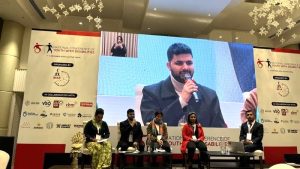
Madhusudan Ghimire speaks as a panelist on SRHR and access to mental health services at the National Conference of Youth with Disabilities.
Ghimire speaks as a panelist on access to mental health services at the National Conference of Youth with Disabilities.

Journey to Mo State 

Ghimire first came to Missouri State in spring 2023 through the Global Undergraduate Exchange Program. It is a Fulbright-supported initiative that brings international students to the United States for a semester of study. Only two students from Nepal were selected that year and Ghimire was one of them. 

After returning to Nepal, he finished his undergraduate degree in psychology. His work took a new direction in 2024, when he served as a psychosocial counselor in integrated schools through the United Kingdom-funded Nepal Earthquake Recovery project in partnership with the Blind Youth Association. Then, in 2025, he received the Fulbright Innovation Fund Award to launch a YouTube podcast on mental health and disability awareness. The 10-episode series focused on mental health and personal stories.  

This spring, he returned to Missouri State to pursue a master’s degree in counseling. He also works as a graduate assistant in Global Education and Engagement, where he helps exchange students adjust to campus life and supports digital accessibility initiatives. 

“Missouri State University is committed to creating a supportive and accessible environment for every student,” said Daezia Smith, leadership programs specialist in Global Education and Engagement. “In our office, Madhusudan helps us to recognize where our materials could be more accessible so we can better serve and reach a wider population.” 

According to Ghimire, Missouri State resources have played a key role in his success. The Disability Resource Center provides accommodations, such as accessible materials and extended testing time.  

“My supervisor, Kevin James, has been very supportive since the day I arrived here,” he said. “The office provided a mobility and orientation instructor, who helped me learn how to navigate campus, my house and offices using BearLine routes.” 

Experience in the counseling program 

So far, Ghimire has had a positive experience in his program and he appreciates the helpful faculty. As a new student, he is still adjusting to campus life and building friendships. Some parts of the counseling training can be challenging, especially lab sessions where students practice counseling with classmates. 

“Sometimes the cultural differences make it difficult because people talk about family or personal issues in ways that feel new to me,” he said. “But it’s helping me learn how support should reflect culture, background and lived experience.” 

As he thinks about his future, Ghimire hopes to combine counseling, disability advocacy and literature in his work. His earlier isolation and challenges now fuel his purpose: helping people facing emotional struggles feel heard, supported and less alone. 

Learn more about the counseling graduate program

Filed Under: Student spotlights Tagged With: Counseling, School of Mental Health and Behavioral Sciences, students

Social work programs reaffirmed through 2033

February 24, 2026 by Sewly Khatun

BSW students and faculty volunteer at Ozarks Food Harvest during Hunger Action Month in fall 2025.

Missouri State University’s social work programs have been reaffirmed through 2033 by the Council on Social Work Education (CSWE). 

The renewal verifies that both the Bachelor of Social Work (BSW) and the Master of Social Work (MSW) programs meet national educational standards. For students, it protects eligibility for licensure and reinforces professional credibility after graduation. 

Program structure and milestones 

The BSW program has been continuously accredited since 1977 and will mark 50 years of accredited social work education in 2027. It enrolled 134 students in spring 2026. 

Dr. Michele Brown (left) and Heather Eckhart (right).

The MSW program enrolled 142 students this spring and continues Missouri State’s decades of nationally recognized social work education since the 1970s. 

“During the recent review cycle, we worked with faculty and practicum leaders to align the MSW curriculum, policies and procedures with CSWE standards,” said Dr. Michele Brown, MSW program coordinator. “That work led to a virtual site visit in April 2025 and official reaffirmation in November 2025.” 

The review also included coordination of field education led by Heather Eckhart, clinical assistant professor in the MSW program. Her practicum oversight contributed to the program’s preparation throughout the review process. 

The BSW program completed a comprehensive review during the same cycle. According to Natalie Curry, BSW program coordinator, the process spanned nearly two years and focused on documenting curriculum alignment and assessment outcomes, with practicum serving as the signature pedagogy of social work education. 

Working closely with Regina Russell, clinical professor and BSW practicum coordinator, Curry helped demonstrate how the program meets accreditation requirements. The BSW program received official reaffirmation in November 2025. 

“Having our accreditation reaffirmed demonstrates the university’s longstanding commitment to high-quality social work education,” Curry said. 

Practical training from the onset 

Field education is central to both programs. The review process affirms that practicum placements meet supervision and learning expectations across sites and community settings. 

For MSW students, Brown noted that the review strengthened alignment between coursework, practicum education and workforce preparation, reinforcing graduates’ readiness for effective practice. 

Curry described accreditation as foundational for students beginning their careers. 

“Accreditation provides confidence that students are receiving an education aligned with national professional standards and preparing them for competent, ethical generalist practice,” she said. 

“Graduating from an accredited BSW program can support eligibility for advanced standing in many MSW programs. It can also help meet licensure requirements in states that recognize the bachelor’s-level social work credential.”

Natalie Curry (left) and Regina Russell (right).

A growing impact 

Reviewers highlighted strengths reflected in students’ day-to-day experiences. MSW students described a well-rounded education that integrates theory and practice while reinforcing the cycle of practice-informed research and research-informed practice. 

In the BSW program, the site visit report described a strong sense of pride across stakeholder groups. It also noted a welcoming, inclusive learning environment where students reported feeling supported, heard and valued by their instructors. 

Both Brown and Curry see this milestone as part of an ongoing process, not an endpoint.  

Brown emphasized the importance of “continuous curriculum enhancement informed by student feedback, community needs and the evolving demands of the social work profession.” 

Curry added, “Looking ahead to the next review in 2033, a key priority is building on what we do well while remaining responsive to student feedback and the evolving needs of the profession.  

“Overall, our goals focus on continuous improvement, maintaining strong accreditation standards and supporting student success.” 

Learn more about social work programs

Filed Under: MCHHS News Tagged With: faculty, Master of Social Work, Michele Brown, Natalie Curry, School of Mental Health and Behavioral Sciences, Social Work

Celebrating the next generation of health care professionals

December 12, 2025 by Sewly Khatun

A group of McQueary College of Health and Human Services students at commencement.

The McQueary College of Health and Human Services (MCHHS) proudly celebrates its students’ achievements. 

Nearly 400 students will graduate this December. Many participated in department or school ceremonies, where they were hooded, pinned and/or received a white coat. 

“William Shakespeare once said, ‘It is not in the stars to hold our destiny, but in ourselves.’ This reminder feels especially meaningful as we celebrate the accomplishments of our students,” said Dr. Letitia White Minnis, MCHHS associate dean. 

She added that each graduation ceremony reflects a moment of transition.  

“On behalf of the MCHHS, I want to congratulate all students celebrating important milestones, whether it be a white coat ceremony, a pinning ceremony or graduation. These achievements reflect your dedication and hard work. We look forward to the positive impact you’ll make in your profession and the communities you serve.” 

These ceremonies mark key academic milestones for students at different stages in their programs. Hooding and pinning recognize progress toward degree completion, while white coat ceremonies represent the transition into clinical rotations.  

The programs 

Occupational Therapy  

  • Twenty-six Master of Occupational Therapy students were hooded. 

Nursing 

  • Fifty-two Bachelor of Science in Nursing students were pinned.
  • One Master of Science in Nursing–Nurse Educator student graduated this December. 

Speech-Language Pathology (SLP) 

  • Twenty-six SLP students were pinned this December. The ceremony recognizes their readiness to begin clinical rotations ahead of spring graduation. 

Physician Assistant Studies (PAS) 

  • Thirty-three PAS students received white coats as they transitioned into clinical training, while another cohort of 33 students graduated this fall. 

Doctor of Nurse Anesthesia Practice (DNAP) 

  • DNAP CRNA (Certified Registered Nurse Anesthetist) students celebrated their program completion at a graduation ceremony, with 21 graduates this year – 15 in August and six in December. 

Counseling program 

  • Twenty-four students in the counseling program graduated this December. 

Psychology 

  • Two students in the psychology program will receive master’s degrees. 

MCHHS remains committed to supporting students as they move from classroom learning into professional practice. These new graduates and trainees will strengthen communities and contribute to the future of the health and human services workforce. 

Explore MCHHS programs

Filed Under: MCHHS Events, MCHHS News Tagged With: Letitia White-Minnis, Master of Occupational Therapy, Physician Assistant Studies, School of Anesthesia, School of Health Care Professions, School of Health Sciences, School of Mental Health and Behavioral Sciences, School of Nursing, speech-language pathology, students

Faculty spotlight: Drs. Sara Wilson and Kristen Thompson

October 27, 2025 by Sewly Khatun

Missouri State University Campus Photo

The McQueary College of Health and Human Services (MCHHS) is proud to feature Dr. Sara Wilson and Dr. Kristen Thompson, assistant professors in the School of Mental Health and Behavioral Sciences. 

Together, they are shaping future clinical psychologists through Missouri State University’s Doctor of Psychology (PsyD) program, focusing on trauma-informed care and resilience.  

Let’s get to know them better. 

Dr. Sara Wilson
Dr. Sara Wilson

Where are you originally from? 

Wilson: I’m from Springfield, Missouri.
Thompson: I grew up in St. Charles, Missouri. 

What brought you to Missouri State and how long have you been here? 

Wilson: I’ve worked in clinical psychology for nearly 15 years and have been drawn to teaching, supervision and clinical training. I joined Missouri State in fall 2024 after seeing the PsyD program as the perfect way to combine my passions for practice, education and mentorship.

Thompson: I’m a proud Missouri State alum and was excited to return as a faculty member. After working for years as a clinician and administrator in community mental health, I wanted a change. Teaching and training were always my favorite parts of my roles. When I saw that the PsyD program needed faculty to help develop the program, I knew it was the perfect fit. 

Can you share your academic journey? 

Wilson: I earned a bachelor’s degree in psychology from Missouri State in 2007. I completed my master’s degree in 2010 and my Doctor of Clinical Psychology degree in 2012 at Forest Institute. 

Thompson: I earned my bachelor’s degree in psychology with a minor in criminology from Missouri State in 2009 and my PhD in Clinical Psychology from Northern Illinois University in 2016. 

What inspired you to pursue a career in clinical psychology? 

Wilson: I’ve always been fascinated by how people think, feel and make meaning of their experiences. Clinical psychology drew me in because it combines science, compassion and the opportunity to help others heal and grow through adversity. 

Thompson: My path to clinical psychology evolved during my undergraduate years as I explored several careers. I eventually figured out that clinical psychology offered the perfect combination for me: the intellectual challenge of understanding why people think, feel and behave as they do, paired with the opportunity to apply that knowledge in working directly with others. 

Where did you work prior to Missouri State? 

Wilson: I worked as system director of clinical education at Burrell Behavioral Health, leading trauma-informed care initiatives, clinical training and consultation across the system. 

Thompson: I worked at Burrell Behavioral Health for seven years as director of pediatric integration and co-founder of the Youth Focus Clinic. 

What excites you most about being part of the PsyD program at Missouri State?

Dr. Kristen Thompson

Wilson: It’s exciting to be part of building a strong, high-quality program alongside such dedicated psychologists. Most of all, I’m inspired by our students — the chance to mentor, support and learn with them is what truly brought me to Missouri State. 

Thompson: Working with students is easily the best part. My professors deeply influenced who I am and how I’ve moved through my career. I’m grateful to have the opportunity to pass on that mentorship by helping students grow personally and professionally. 

How do you engage doctoral students in the classroom? 

Wilson: I want learning to feel meaningful and connected for my students. I strive to create a supportive space where students can show up authentically, take risks and see how what they learn applies to real clinical work. 

Thompson: I don’t think it’s possible for graduate students to learn every theory or technique, so I focus on teaching them how to evaluate research on their own and develop skills in new areas. We analyze research studies, discuss central themes and mechanisms of action and make connections across theories and treatments. We do role plays and give feedback, not to master a specific skill, but rather to master the skill of mastering skills. I want them leaving my classes thinking, ‘I may not know everything about this approach, but I know how to learn it, evaluate it critically and figure out if it’s right for this situation.’ 

What research areas or clinical interests do you focus on? 

Wilson: My clinical and research focus is trauma and trauma-informed care. With Dr. Thompson, I co-lead the Resilience and Connection Collective, guiding projects with real-world impact, from ROTC training to ACEs (Adverse Childhood Experiences) research and community initiatives. 

Thompson: Like Dr. Wilson, I focus on early adversity and trauma-informed strategies. One project that I’m especially excited about is our development of a trauma-informed leadership training with Lt. Col. Kyle Reeves and the ROTC program. 

Outside of work, what’s your favorite way to spend your time? 

Wilson: I love spending time with my family and pets, being outdoors, listening to music and reading. Those moments help me recharge and stay grounded. 

Thompson: Traveling with my family and exploring national parks. We’ve visited 11 so far and plan to reach number 12 soon! 

What might surprise people about you? 

Wilson: Despite striving to be warm and reflective in my work, I can be fiercely competitive, especially during board games or trivia nights. 

Thompson: I’m a mom to four and a pediatric psychologist, yet I’m really not a fan of cartoons. I’m not a Disney lover and I especially don’t like adult cartoons. Comedies, yes. Kids books, absolutely. I can’t really put my finger on it, but I’ve always felt this way.

Learn more about Doctor of Psychology

Filed Under: Faculty Spotlight, MCHHS News Tagged With: faculty, Kristen Thompson, Psychology, PsyD, Sara Wilson, School of Mental Health and Behavioral Sciences

« Previous Page
Next Page »

Categories

Archives

Meta

  • Log in
  • Entries feed
  • Comments feed
  • WordPress.org
  • Accessibility
  • Disclaimer
  • Disclosures
  • Equal Opportunity Employer and Institution
  • © 2026 Board of Governors, Missouri State University
  • Contact Information

Loading Comments...